
 Made in China
 English


-

-

-

QINGDAO, SHANGHAI, CHINA
QINGDAO, SHANGHAI, CHINA
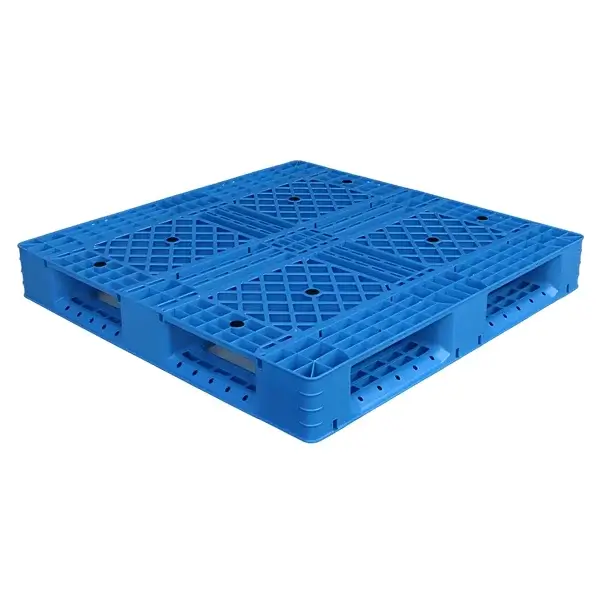
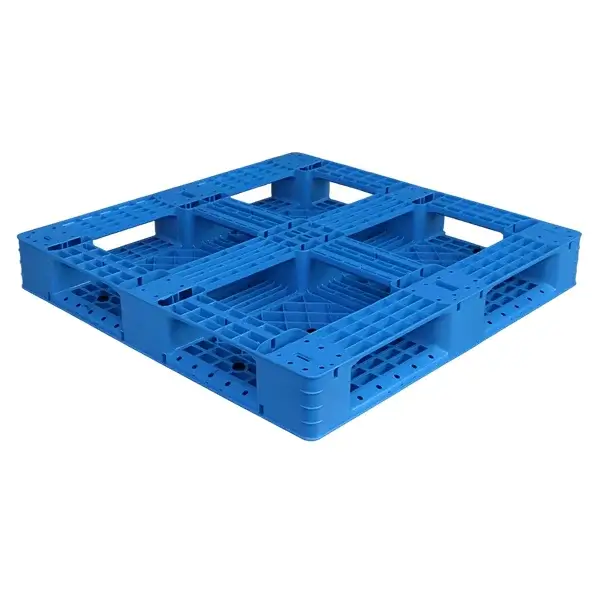
Walk through almost any busy warehouse, food plant, or export staging area, and you will usually find the same pallet-related complaints repeating themselves: splinters from wood pallets, inconsistent dimensions causing conveyor issues, trapped water after washdown, and damaged product because the load never sat quite right. On paper, a pallet is a simple tool. In actual operations, it quietly affects hygiene, forklift efficiency, stack stability, and replacement cost.
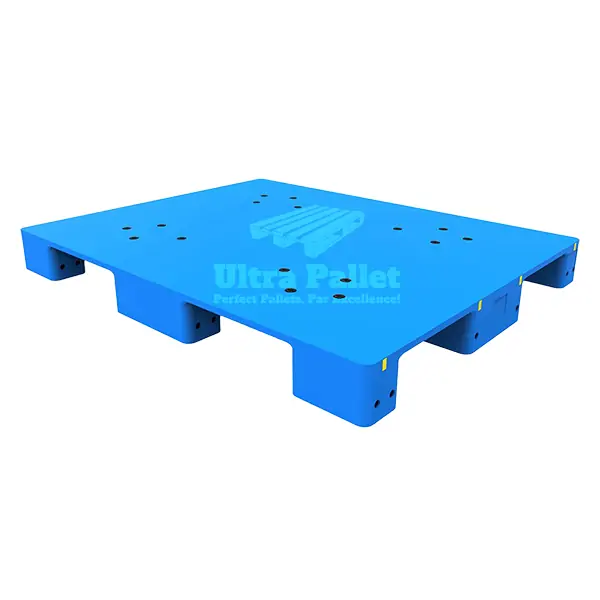
That is where the standard 1100x1100 industrial plastic pallet mesh surface fits in. It is not just a plastic version of a traditional pallet. When the design is done properly, the 1100x1100 footprint, industrial-grade polymer structure, and ventilated mesh deck work together to solve several day-to-day handling problems at once. For buyers managing warehouse throughput, export compliance, or cleaner production environments, this format often lands in the sweet spot between cost, durability, and operational consistency.
What we've seen in the field is that many buyers first focus on unit price, then only later realize the bigger cost drivers were pallet breakage, sanitation labor, and load instability. A well-selected plastic pallet does not magically fix every logistics problem, but it can remove a surprising amount of friction from routine movement, storage, and shipping.
The 1100x1100 pallet size is widely used because it gives a balanced square footprint that works well in many regional and international handling systems. Compared with more irregular pallet dimensions, a square pallet often makes load planning easier when goods are packed in bags, pails, cartons, or drums that do not naturally align to a long rectangular base.
One detail that often gets overlooked is turning behavior in tighter warehouse aisles. A square pallet can be easier to orient during forklift handling, especially when operators are moving quickly between staging and rack zones. That does not remove the need to confirm entry direction, but it can reduce awkward overhang patterns when products are stacked in symmetric layers.
For export buyers, dimensional consistency is another practical benefit. Wood pallets can vary more from batch to batch due to moisture content, board quality, and assembly tolerance. Plastic pallets, especially when molded under controlled conditions, are typically more uniform in size and shape. That matters when palletized goods interact with conveyors, wrappers, stackers, or automated storage systems.
At a glance, a mesh surface pallet looks simple. Under load, however, its performance depends on several design choices working together: material selection, rib layout, deck geometry, leg or runner structure, and molding quality.
Most industrial plastic pallets are made from HDPE or PP, sometimes using virgin resin, sometimes recycled blends, and sometimes reinforced formulations depending on the application. The exact grade affects stiffness, impact resistance, low-temperature behavior, and long-term creep under load.
In practical terms, HDPE is often chosen where impact resistance and chemical tolerance are priorities, while PP may be selected where stiffness and heat resistance are more important. The right answer depends on how the pallet will be used. If your pallets spend hours in cold rooms or are frequently struck by forklifts, impact behavior deserves close attention. If they move through warmer process areas or carry dense static loads, rigidity becomes more relevant.
The math works out this way: plastic is less dense than many alternative structural materials, but its stiffness is also lower than metal. That means the pallet cannot rely on bulk material alone. The design has to create strength through geometry.
The mesh surface is not there just to save material. It serves several useful operational purposes.
First, it improves airflow. In sectors handling agricultural produce, packaged food, or washdown-sensitive products, better air circulation can help surfaces dry faster after cleaning or environmental exposure. Faster drying can reduce the time pallets sit out of use and may also reduce the chance of moisture staying trapped under packaged goods.
Second, the open deck allows drainage. In wet processing or frequent sanitation environments, solid-top pallets can hold standing water if the surface design is not sloped or channeled. A mesh deck reduces that problem by giving water a path through the structure rather than forcing it to pool.
Third, the rib network helps distribute load across the deck. A well-designed mesh pattern is not random. The spacing and rib thickness affect how point loads spread into the pallet body. If heavy cartons or pails rest on only a few contact points, weak deck geometry can crack earlier than expected. Better deck engineering lowers stress concentration.
A buyer should never treat pallet load capacity as one single number. In real operations, there are at least three different load conditions to think about:
Static load: the pallet is sitting still on the floor.
Dynamic load: the pallet is being moved by forklift or pallet jack.
Racking load: the pallet is supported across beams in a rack.
This is where lower-tier alternatives often disappoint. A pallet may hold a heavy load while sitting flat on the ground, but sag noticeably when picked up or placed across rack beams. The reason is straightforward: support points change, so bending stress changes.
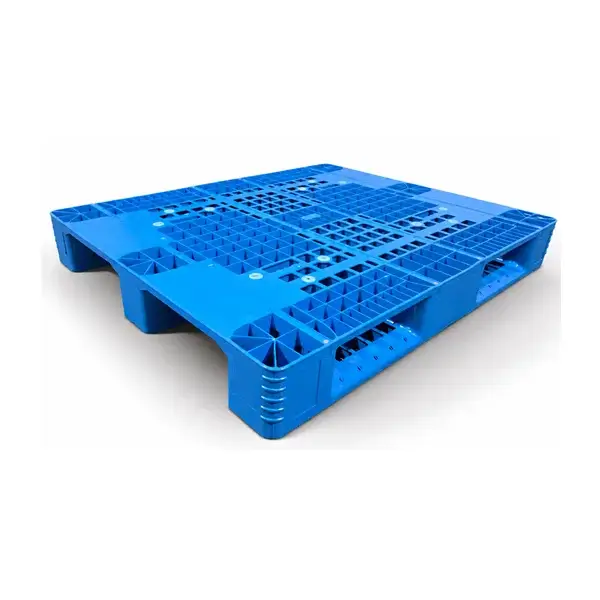
What we've seen in the field is that buyers sometimes specify by static load only, then run into failures during transport or beam storage. For a standard 1100x1100 industrial plastic pallet, the underside structure—whether legs, perimeter runners, or reinforced channels—has a direct impact on how well it handles dynamic lifting and racking spans.
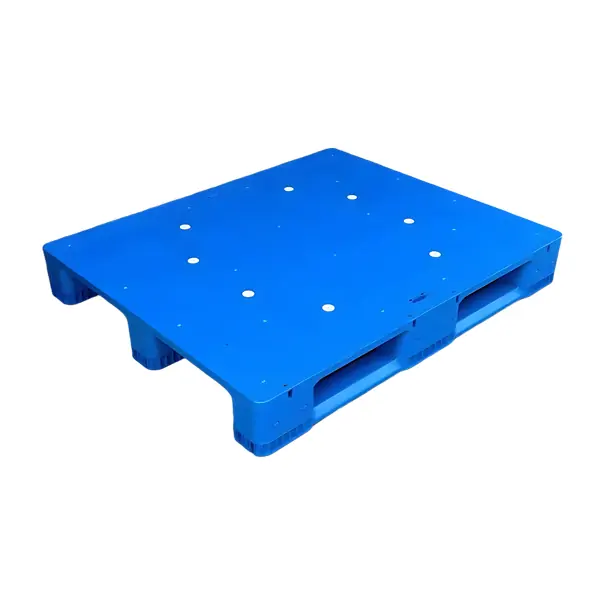
The deck texture also matters more than many teams expect. Smooth plastic can allow some packaged goods to shift more easily than rough wood, especially if the load contains shrink-wrapped cartons with slick outer film. Many mesh pallets address this with anti-slip pads, textured contact zones, or deck patterns that increase friction.
This is worth checking before purchase. If your products are bagged chemicals, stacked beverage cartons, or plastic pails, a few millimeters of movement during repeated forklift starts and stops can turn into load leaning or wrap failure by the time goods reach the truck.
The standard 1100x1100 industrial plastic pallet mesh surface is not ideal for every imaginable job, but there are several environments where it tends to make very practical sense.
In food and beverage plants, hygiene and washability are constant concerns. Wood absorbs moisture, sheds debris, and can become difficult to keep clean over time. A plastic mesh pallet is easier to wash down and inspect visually.
What we noticed during field trials in washdown-heavy areas is that pallets with open deck structures usually return to service faster after cleaning than solid, water-holding alternatives. The gain is not only about cleanliness; it also affects pallet circulation and floor congestion.
Facilities with stricter housekeeping standards often prefer plastic pallets because they are less likely to generate dust, loose fibers, or splinter fragments. Mesh surface designs add another advantage by reducing water retention after sanitation routines.
For secondary packaging, where consistency matters for conveyors and stretch wrappers, dimensional uniformity is often more valuable than buyers expect. Even small differences in pallet height or deck flatness can cause nuisance stoppages in semi-automated lines.
Plastic pallets remove the need for phytosanitary treatment concerns associated with certain wood pallet movements. That can simplify export preparation, particularly for repeat shipments into markets with strict packaging controls.
They also tend to arrive looking more consistent after multiple cycles. For exporters moving branded goods, that matters. A damaged pallet at destination does not just create handling trouble; it also affects how the shipment is perceived by distributors and end users.
In chemical environments, resistance to moisture and many common substances can be a practical advantage, provided compatibility is confirmed for the exact chemical exposure. In agriculture and cold-chain movement, the mesh deck helps with drainage and reduces the chance of water sitting on the pallet surface.
One detail that often gets overlooked in cold storage is impact behavior at low temperature. Some plastic formulations remain tougher than others when chilled. If your operation includes freezer handling, this should be discussed early with the supplier rather than after the first winter damage claims.
A standard plastic pallet usually costs more upfront than a basic wood pallet. That part is obvious. The less obvious part is how often the cheaper option becomes more expensive once real handling conditions are considered.
Wood still has a place in many supply chains, especially one-way shipments and low-cost distribution loops. But the tradeoff is variability. Board thickness, nail placement, moisture absorption, and repair quality all affect service life.
The hidden costs show up in several ways:
Product damage from broken boards or protruding nails
Cleanup labor from splinters and debris
More frequent replacement cycles
Inconsistent handling on conveyors or wrappers
Extra compliance steps for some export programs
If a plastic pallet lasts multiple cycles longer than a disposable wood pallet, the cost comparison changes quickly. The exact payback depends on trip frequency, damage rates, and retrieval success, but the logic is straightforward: the more cycles you get from a pallet, the more the initial cost gets diluted per use.
Not all plastic pallets belong in industrial applications. Lightweight, low-resin, or poorly reinforced models can crack at stress points, warp under load, or become unstable in rack systems.
We ran a simple test comparing heavier-ribbed industrial pallets with lighter economy models in a common warehouse scenario: repeated forklift pickup with moderate load and occasional uneven floor impact. The lighter models did not always fail immediately, but they showed earlier fatigue signs around fork entry zones and support ribs. That is often how pallet costs creep up—not through dramatic collapse, but through steady attrition.
Plastic pallets generally need less maintenance than repairable wood pallets because there are no boards to renail and no protruding fasteners to manage. If a facility handles thousands of pallet movements per week, even small reductions in inspection time, cleanup, or load restacking can add up.
Think about the labor chain around a failed pallet:
Operator notices damage
Load is set aside
Product may need restacking
Replacement pallet is fetched
Debris may require cleanup
Shipment timing is affected
Even if each event only consumes several minutes, repeated failures can create measurable downtime over a month. Buyers often underestimate this because pallet losses are spread across departments rather than captured in one clean budget line.
If you are comparing suppliers, there are several questions worth asking before you focus too heavily on quoted price.
Ask for static, dynamic, and racking capacity separately. Then compare those numbers to your actual use case. A floor-stored bagged product has different demands than a beam-racked carton load or a high-turn forklift operation.
If possible, ask how the rating was determined. Was it based on evenly distributed load? Was reinforcement used? What beam span was assumed for racking?
Confirm whether the pallet is two-way or four-way entry, and whether it works with both forklifts and pallet jacks used in your facility. Some pallets handle forklift entry well but are less friendly with certain jack wheel setups.
Installation pitfall we commonly see: buyers choose a pallet based on load rating but forget to match fork opening dimensions to the actual handling equipment. That can cause impact damage long before the pallet has reached its theoretical structural limit.
A mesh deck that works well for cartons may not be ideal for very small-footprint products unless the support pattern matches the load base. If your goods sit in narrow contact areas, ask whether the deck spacing supports them adequately.
This is especially relevant for drums, small bins, and rigid containers with concentrated foot rings. A pallet can be structurally strong overall but still perform poorly if the product's contact points do not align with the stronger deck zones.
Recycled-content pallets can be a sensible choice in the right application, but quality consistency matters. Ask whether the pallet is made from virgin resin, recycled resin, or a blend, and whether the formulation is intended for cold rooms, outdoor UV exposure, or chemical contact.
The goal is not to reject recycled material automatically. It is to make sure the material recipe matches the operating environment.
For hygiene-sensitive sectors, inspect the pallet for dirt traps, inaccessible pockets, or rough flash left from molding. A pallet that looks acceptable in a photo may be harder to clean thoroughly in real production conditions.
One detail that often gets overlooked is whether labels, residues, or stretch wrap fragments get caught in the mesh design. Small housekeeping annoyances become bigger when multiplied across hundreds of pallet turns.
Plastic pallets are lower maintenance, not zero maintenance. A few habits help extend usable life:
Avoid impact from high-speed fork entry
Do not exceed rack span assumptions
Store empty pallets flat and evenly stacked
Inspect fork entry edges for early cracking
Remove heavily damaged pallets before they damage product loads
If the pallet is used in mixed environments—cold storage, staging yard, then indoor racking—monitor how temperature changes affect impact zones. Repeated rough handling in cold conditions is one of the fastest ways to shorten pallet life, even on otherwise sound products.
For operations building a reusable pallet pool, it also helps to assign pallets by duty level. Use stronger units for racking or dense loads, and reserve lighter-duty pallets for floor storage or shorter internal transfers. Matching pallet grade to task usually lowers total replacement cost.
A standard 1100x1100 industrial plastic pallet with mesh surface solves a set of very practical problems that warehouse and plant teams deal with every day: inconsistent pallet dimensions, moisture retention, sanitation effort, and avoidable load damage. Its value is not just in being plastic. It comes from the combination of stable sizing, engineered rib structure, better drainage, cleaner handling, and more predictable multi-cycle use.
For buyers in food processing, export logistics, packaging, chemical handling, and general warehousing, this pallet format often delivers a better long-term cost picture than the cheapest alternative on the quotation sheet. The purchase decision should be based on real load conditions, handling methods, and cleaning requirements—not just unit price.
If you are comparing pallet options now, the next smart step is to review the detailed specification sheet, confirm load ratings for your actual storage method, and ask for guidance based on your product type and handling equipment. That conversation usually reveals very quickly whether a pallet is merely acceptable or genuinely fit for your operation.




 Phone:+8617685506632
 Whatsapp/Zalo:+8617685506632
 Mailbox:howard@ultrapallet.com
 Address:QINGDAO, SHANGHAI, CHINA

© 2025 UltraPallet – Factory in China | Privacy (GDPR) | Factory Hotline: +86 17685506632 | sales@ultrapallet.com
Privacy (GDPR) – B2B exemption; data controlled from Qingdao HQ.
🏭 Factory Direct Price | SITEMAP
Effective Date: April 21, 2025
UltraPallet (Qingdao) Industrial Co., Ltd.
Qingdao, China
Email: privacy@ultrapallet.com
Factory Hotline: +86 17685506632
UltraPallet operates exclusively as a Business-to-Business (B2B) manufacturer and supplier. Under GDPR Article 6(1)(f) (legitimate interests) and recitals related to corporate contact information, our processing of business contact data does not fall under the full scope of GDPR requirements intended for consumer (B2C) data protection. However, we remain committed to protecting all business information with high standards.
We may collect the following business-related information:
We process your data based on:
We retain business contact and transaction data for as long as necessary to fulfill the purposes outlined in this policy, typically 5 years after the last interaction, unless a longer retention period is required by law (e.g., tax records: 7 years).
Our website uses essential cookies for functionality. We do NOT use marketing or analytics cookies without consent. You may disable cookies via browser settings, but some site features may be affected.
As a China-based manufacturer, your data may be transferred to and processed in China. For business operations, we may share data with:
We ensure appropriate safeguards (e.g., Standard Contractual Clauses) for any international transfers.
Even under B2B exemption, we respect your rights. You may request:
To exercise any right, contact us at privacy@ultrapallet.com. We will respond within 30 days.
If you believe we have not adequately addressed your privacy concerns, you have the right to lodge a complaint with your local supervisory authority or with the Chinese data protection authorities.
We may update our Privacy Policy periodically. The "Effective Date" at the top indicates when changes are made. Continued use of our services constitutes acceptance of updates.
For any privacy-related questions or to exercise your rights:
📧 privacy@ultrapallet.com
📞 +86 17685506632
📍 Qingdao, China (HQ)

Fill in below – we'll reply within 2 hours (UTC+8)

Get Your Best Price & Solution Fast

 ×
×

Factory Direct · China
Zalo
💬 Chat on ZaloPhone
📞 +86 176 8550 6632Factory Quote
