Made in China
 English


-

-

-

QINGDAO, SHANGHAI, CHINA
QINGDAO, SHANGHAI, CHINA
Published: June 15, 2026 | Category: Material Science
1. What is HDPE? Definition and Molecular Structure of High‑Density Polyethylene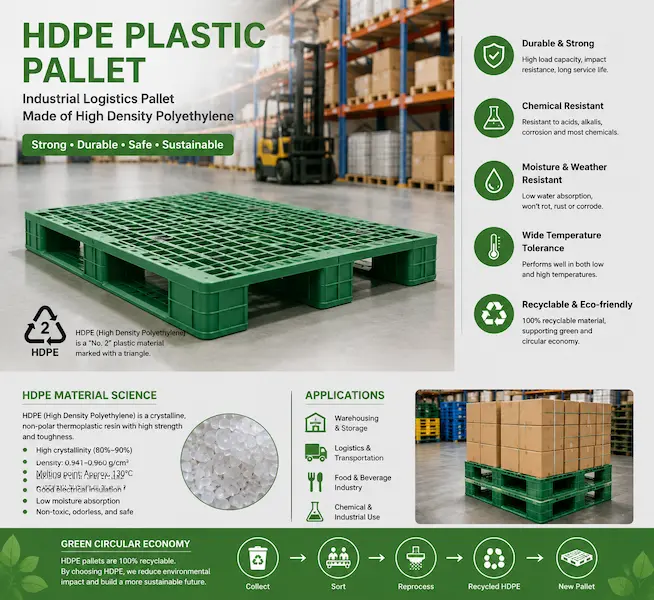
2. Top Technical Properties of HDPE Resin
3. Why HDPE is the #1 Material for Industrial Plastic Pallets
4. HDPE vs Traditional Wood Pallets and Other Plastic Materials
5. Modern Injection‑Molding Production of HDPE Pallets
6. HDPE Pallets and the Circular Economy Trend in Vietnam
7. Frequently Asked Questions about HDPE
8. Conclusion: Integrating HDPE into a Smart Supply Chain
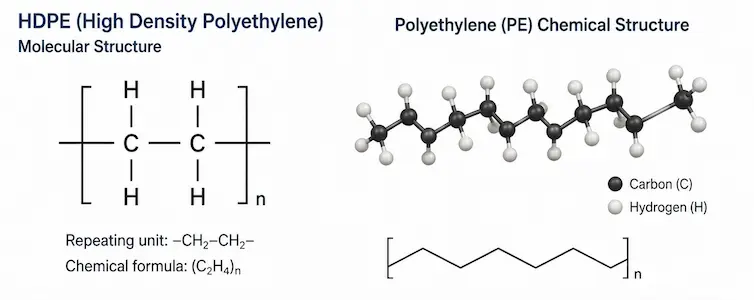
To fully appreciate the engineering value of HDPE, we must first answer the fundamental question: what is HDPE? HDPE stands for High‑Density Polyethylene, a thermoplastic polyolefin composed of long ethylene (C₂H₄) polymer chains with a predominantly linear, unbranched molecular structure. This highly linear configuration allows the polymer chains to pack closely together, resulting in a high degree of crystallinity and a density typically ranging from 0.93 to 0.97 g/cm³.
In contrast to Low‑Density Polyethylene (LDPE), which contains numerous short and long chain branches, the dense structure of HDPE provides superior rigidity, tensile strength, and resistance to deformation under mechanical load.
One of the most critical thermal indicators for any engineering polymer is its melting point. HDPE exhibits a melting temperature in the range of 120 – 140°C, significantly higher than that of many commodity polyolefins. This high thermal stability ensures that HDPE pallets do not warp, soften, or lose dimensional integrity when operating in demanding environments such as refrigerated warehouses, sun‑exposed containers, or confined factory floors.
Chemically, HDPE is a non‑polar polymer with extremely low surface energy, which translates into very low moisture absorption (virtually zero) and excellent resistance against a wide spectrum of solvents, acids, bases, oils, and greases. This chemical inertness explains why HDPE pallets can be used across the food, pharmaceutical, and chemical industries without any risk of contamination or corrosion over time. Leading global suppliers such as LyondellBasell, ExxonMobil, and Chevron Phillips offer multiple specialized HDPE injection‑molding grades that balance stiffness, impact resistance, and flowability for large pallet tooling.
To meet the high standards of industrial logistics, we need to examine the detailed data sheet of HDPE based on internationally recognized testing standards.
HDPE has a typical solid density of 0.941 – 0.965 g/cm³, which makes it sink in still water. The crystalline melting point lies between 120°C and 140°C, depending on the degree of crystallinity of the specific polymer grade. The glass transition temperature (Tg) of HDPE is extremely low, around –125°C to –100°C, allowing the material to retain its toughness and ductility even in deep‑freeze cold‑storage environments. HDPE pallets can therefore operate 24/7 in frozen food warehouses at –30°C without any sign of brittle fracture.
Data from ASTM D638 tensile testing shows that HDPE has a yield tensile strength in the range of 20 – 37 MPa (megapascals), which corresponds to approximately 2,900 – 5,400 psi. For high‑strength HDPE grades such as LyondellBasell LT602901, the tensile strength at yield can reach 30.3 MPa with an elongation at break of up to 1,000%, ensuring uniform load distribution across the entire pallet surface without catastrophic failure. Furthermore, the Shore D hardness of HDPE typically lies between 63 and 67, providing excellent surface resistance against scratching and abrasion from forklifts and other material‑handling equipment throughout the product lifecycle.
HDPE stands out for its exceptional chemical resistance and extremely low water absorption (typically below 0.01%). HDPE pallets can come into direct contact with oils, greases, organic solvents, dilute acids, and alkalis without swelling, cracking, or losing mechanical properties. Compared to traditional wood pallets (which are prone to rot, mold, and bacterial adhesion), the non‑porous surface of HDPE pallets is completely impermeable to moisture, does not promote mold or bacterial growth, and can be easily cleaned using standard CIP (Clean‑in‑Place) systems compliant with HACCP requirements.
A particularly vital property for shipping pallets is the impact strength of HDPE. Thanks to its tightly packed crystalline structure, HDPE can absorb large amounts of impact energy without brittle failure, even at low temperatures. This explains why HDPE pallets can survive rough handling by forklifts, free falls from high‑speed conveyors, or repeated collisions during container stuffing. Industrial‑grade HDPE plastic pallets typically have a service life of 10 years or more, far exceeding the average 2‑ to 3‑year lifespan of wooden pallets under identical operating conditions.
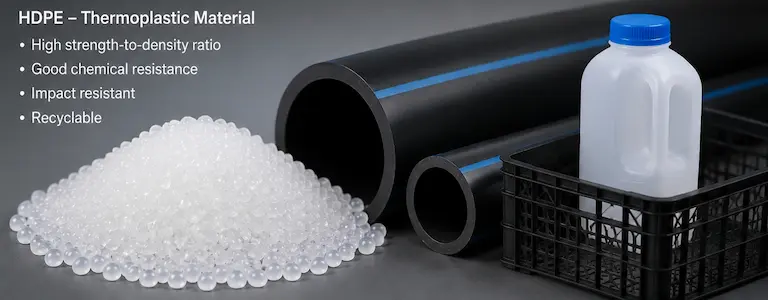
Having answered the question “what is HDPE” at both the molecular and mechanical levels, we now turn to the global market perspective. Within the plastic pallet segment, HDPE holds the largest market share, accounting for more than 54% of total pallet material demand worldwide. It is no surprise that leading manufacturers prefer HDPE as their core resin, because HDPE can be fully recycled at the end of its useful life, actively contributing to a sustainable circular‑economy model.
Top pallet manufacturers use either virgin or post‑industrial recycled HDPE in their modern injection‑molding lines. HDPE exhibits a stable melt flow index (MFI), typically ranging from 0.2 to 8 g/10 min under ASTM D1238 depending on the grade, which allows the molten plastic to fill large molds up to 1,600 x 1,200 mm quickly and uniformly. At the same time, the mold shrinkage rate of HDPE is very low (approximately 1.5 – 4.0%), ensuring that the final dimensions of the pallet are accurate and that stacking and storage in automated racking systems proceed smoothly.
Beyond manufacturing efficiency, HDPE pallets solve a major export bottleneck. Wooden pallets must undergo heat treatment or fumigation under ISPM‑15 standards before they can cross international borders, whereas HDPE pallets are completely exempt from this regulation. HDPE plastic pallets can be exported immediately to any country in the world without incurring additional quarantine costs. This feature is especially important for Vietnamese exporters of seafood, agricultural products, electronics components, and pharmaceuticals who ship to demanding markets in the EU, North America, and Japan.
For a direct and practical comparison, the table below contrasts HDPE pallets against traditional wood pallets and other common plastic pallet materials such as PP (polypropylene) and recycled mixed resins:
Parameter | Virgin / Recycled HDPE Pallet | Traditional Wood Pallet | PP (Polypropylene) Pallet |
Moisture & mold resistance | Absolutely waterproof | Absorbs moisture, rots, molds | Very good, high moisture resistance |
Chemical resistance | Resistant to acids, oils, solvents | Poor, easily absorbs chemicals | Good, but less than HDPE |
Weight | Light, uniform (approx. 12–18 kg) | Heavy, inconsistent | Lighter than HDPE |
Food‑safety hygiene | Fully compliant, non‑porous, easy CIP | Not compliant (absorbs water & bacteria) | Compliant if food‑grade grade is used |
Average service life | 7 – 10 years | 2 – 3 years | 5 – 8 years |
Lifecycle cost | Very low (reusable & recyclable) | High (frequent replacement) | Low |
Post‑use recyclability | 100% recyclable into new pallets | Difficult, slow biodegradation | Recyclable |
Export (ISPM‑15) | Exempt, ready to ship | Mandatory heat treatment | Exempt |
According to IMARC, the Vietnam pallet market reached a size of USD 341.8 million in 2025 and is projected to reach USD 510.1 million by 2034, growing at a compound annual growth rate (CAGR) of 4.55% during the 2026‑2034 period. The ongoing shift from wooden pallets to HDPE pallets is a major driver of this growth, especially as green logistics and food‑safety standards become increasingly important in key industrial zones such as Bình Dương, Đồng Nai, Hải Phòng, and Bắc Ninh.
The standard production process for HDPE pallets involves the following key technological steps:
1. Resin Drying: HDPE pellets (virgin or recycled) are fed into a drying system to reduce moisture content to below 0.02%, preventing bubble formation in the final product.
2. Heating and Melting: The dried material enters a heated screw barrel, where the temperature is raised to approximately 200 – 280°C. At this stage, HDPE transitions completely from a solid to a molten state.
3. Injection into Mold: The molten HDPE is injected at extremely high pressure (typically 1,000 – 1,800 bar) into a steel mold that defines the pallet shape. High‑pressure injection molding allows the creation of uniform wall thicknesses and optimized material distribution.
4. Shaping and Cooling: After the cavity is filled, the pallet is rapidly cooled using circulating oil or water to stabilize its shape and dimensions. The cooling rate directly affects the degree of crystallinity and the final mechanical properties of the finished pallet.
5. Demolding and Quality Control: The pallet is ejected from the mold, flash is trimmed, and each unit undergoes rigorous testing for load capacity, flatness, and surface finish. Pallets that meet the specifications are packaged and stored.
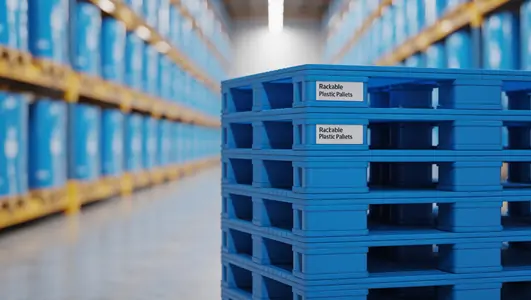
Modern injection‑molding technology also enables the production of double‑face HDPE pallets, in which both the top and bottom decks have identical load‑bearing capabilities. This double‑face design is ideal for automated storage and retrieval systems (ASRS), because the pallet can be reversed without affecting the stability of the entire stacked load.
The global push toward sustainable development is fundamentally changing how Vietnamese logistics companies view pallets. HDPE can be collected, cleaned, reprocessed, and turned back into new pallets with quality nearly equivalent to virgin material, reaching up to 100% recycled content for less demanding applications. According to statistics from iGPS, many HDPE plastic pallets can complete more than 100 shipping cycles before they need to be recycled, delivering a superior lifecycle efficiency compared to wood pallets.
In the Vietnamese market, leading pallet manufacturers such as NPC VINA, Duy Tan, Long Thanh Plastic, and Hanoi Plastics collectively hold more than 75% of the market share and are continuously expanding their plant capacities to meet both domestic and export demand. Reusable HDPE pallets now account for more than 70% of total market demand, driven by corporate sustainability initiatives and the lifecycle cost advantages over wood alternatives. The food and beverage industry remains the largest application segment, representing over 27% of the HDPE pallet market share.
As businesses transition toward circular logistics models, they not only save on the cost of purchasing new pallets but also significantly reduce the carbon footprint of their supply chains. Choosing HDPE pallets is no longer merely an operational decision; it has become a smart, responsible business strategy that aligns with international environmental standards.
Yes, HDPE pallets manufactured from virgin food‑grade resin are safe for direct food contact. Food‑grade HDPE contains no Bisphenol A (BPA) or phthalates, and its smooth, non‑porous surface naturally resists bacterial growth while absorbing neither moisture nor odors. Many Vietnamese seafood and frozen‑food processors have switched to HDPE pallets after experiencing cross‑contamination issues with wooden pallets.
HDPE has a melting point of approximately 120 – 140°C, and HDPE pallets perform reliably within a service temperature range of –30°C to +80°C. This range comfortably covers the vast majority of warehouse, container, and trucking operations. However, HDPE pallets should not be placed in direct, prolonged contact with hot surfaces exceeding 100°C.
HDPE pallets can be recycled multiple times without significant degradation of mechanical properties, provided that the material is properly sorted and processed. Manufacturers can use 100% recycled HDPE to produce new pallets for applications that do not require the highest load ratings. The theoretical recycle life of HDPE is unlimited, but in practice, most HDPE goes through 5 to 10 regeneration cycles before physical properties begin to decline noticeably.
The initial purchase price of an HDPE pallet is typically 2 to 3 times higher than that of a wooden pallet. However, when evaluated on a total lifecycle cost basis (including repair, replacement, quarantine treatment, and end‑of‑life disposal), HDPE pallets are significantly more economical. With a service life of 7 to 10 years, a single HDPE pallet can replace 3 to 5 wooden pallets, not to mention the savings in labor for replacement and the reduction in product damage risk.
We have now answered the fundamental question “what is HDPE” in detail, from its molecular architecture and physical‑chemical properties to its real‑world applications in industrial pallet manufacturing and modern logistics. With its outstanding advantages in load‑bearing capacity, chemical resistance, food‑safety hygiene, long service life, and full recyclability, HDPE stands out as the premier choice for companies seeking to optimize their supply chains in a sustainable manner.
If your business operates in manufacturing, agricultural or seafood export, retail, or third‑party logistics, switching from traditional wood pallets or low‑grade plastic pallets to genuine HDPE pallets will help you:
- Reduce product damage caused by moisture, mold, chemicals, or impact;
- Optimize cleaning procedures to meet HACCP and ISO 22000 standards;
- Improve storage space utilization through standardized stacking and racking compatibility;
- Comply with strict export phytosanitary regulations (ISPM‑15 exemption);
- Build a greener brand image and increase sustainable value in the eyes of international partners.
The technical team at UltraPallet is always ready to advise you on the most suitable HDPE grade for your specific industry, load requirements, and actual operating environment. Contact us today to receive a customized quotation for HDPE pallets based on your required dimensions and order quantities.


 Phone:+8617685506632
 Whatsapp/Zalo:+8617685506632
 Mailbox:howard@ultrapallet.com
 Address:QINGDAO, SHANGHAI, CHINA

© 2025 UltraPallet – Factory in China | Privacy (GDPR) | Factory Hotline: +86 17685506632 | sales@ultrapallet.com
Privacy (GDPR) – B2B exemption; data controlled from Qingdao HQ.
🏭 Factory Direct Price | SITEMAP
Effective Date: April 21, 2025
UltraPallet (Qingdao) Industrial Co., Ltd.
Qingdao, China
Email: privacy@ultrapallet.com
Factory Hotline: +86 17685506632
UltraPallet operates exclusively as a Business-to-Business (B2B) manufacturer and supplier. Under GDPR Article 6(1)(f) (legitimate interests) and recitals related to corporate contact information, our processing of business contact data does not fall under the full scope of GDPR requirements intended for consumer (B2C) data protection. However, we remain committed to protecting all business information with high standards.
We may collect the following business-related information:
We process your data based on:
We retain business contact and transaction data for as long as necessary to fulfill the purposes outlined in this policy, typically 5 years after the last interaction, unless a longer retention period is required by law (e.g., tax records: 7 years).
Our website uses essential cookies for functionality. We do NOT use marketing or analytics cookies without consent. You may disable cookies via browser settings, but some site features may be affected.
As a China-based manufacturer, your data may be transferred to and processed in China. For business operations, we may share data with:
We ensure appropriate safeguards (e.g., Standard Contractual Clauses) for any international transfers.
Even under B2B exemption, we respect your rights. You may request:
To exercise any right, contact us at privacy@ultrapallet.com. We will respond within 30 days.
If you believe we have not adequately addressed your privacy concerns, you have the right to lodge a complaint with your local supervisory authority or with the Chinese data protection authorities.
We may update this policy periodically. The "Effective Date" at the top indicates when changes are made. Continued use of our services constitutes acceptance of updates.
For any privacy-related questions or to exercise your rights:
📧 privacy@ultrapallet.com
📞 +86 17685506632
📍 Qingdao, China (HQ)

Fill in below – we'll reply within 2 hours (UTC+8)

Get Your Best Price & Solution Fast