
 Made in China
 English


-

-

-

QINGDAO, SHANGHAI, CHINA
QINGDAO, SHANGHAI, CHINA
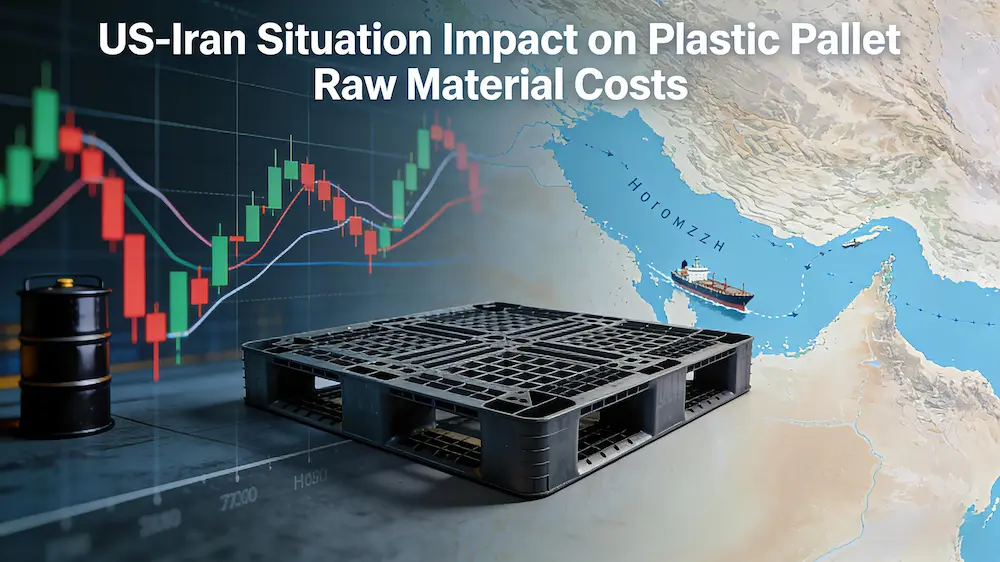
With over a decade of expertise in the global plastic pallet industry, it is clear that this sector, though rooted in manufacturing, is highly susceptible to global dynamics—including both domestic supply-demand trends and international geopolitical shifts. As the current US-Iran situation continues to escalate, many industry peers around the world have been asking: how will this geopolitical conflict, unfolding thousands of miles away in the Middle East, impact the plastic pallets we rely on daily? Today, setting aside all political stances, we will break down this correlation purely from a raw material perspective, using practical industry experience and data to deliver straightforward, actionable insights.
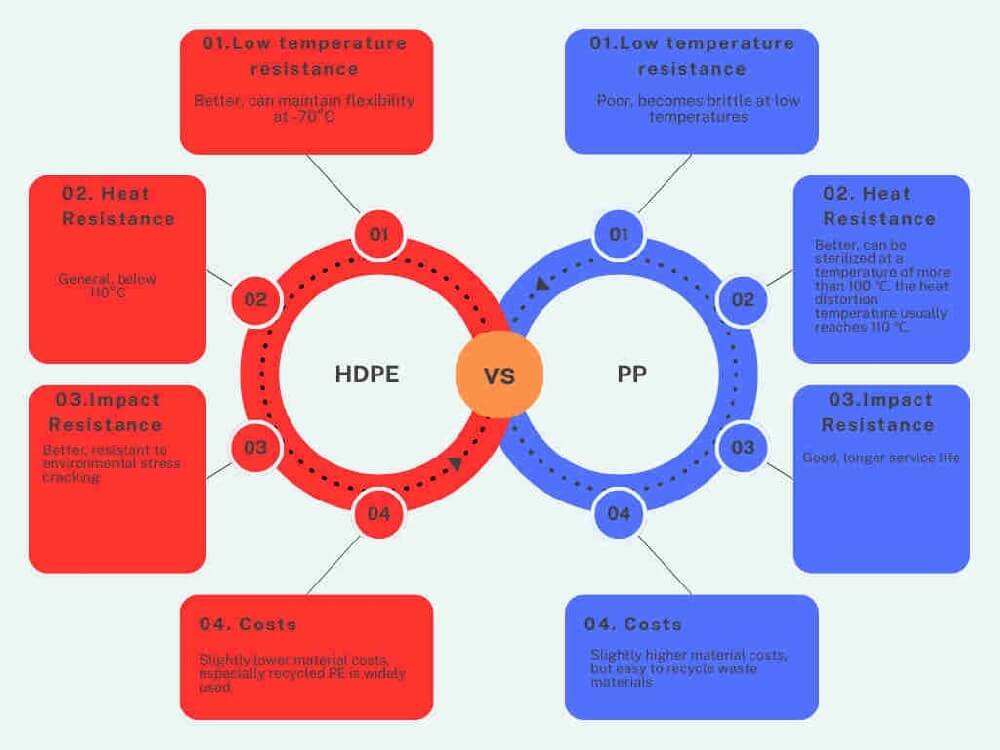
To understand this logic, we first need to clarify a core point: raw materials are the lifeline of plastic pallets, and the barometer of raw material prices is inevitably tied to crude oil. The two most commonly used raw materials for plastic pallet production globally—High-Density Polyethylene (HDPE) and Polypropylene (PP)—are essentially derivatives of crude oil refining. Much like a mother and her child, every fluctuation in crude oil prices directly impacts these two raw materials, which in turn affects the cost and supply of the entire plastic pallet industry. This is an inescapable underlying logic of the sector.
The core impact of the US-Iran situation lies in the crude oil supply chain. As a major global crude oil exporter, Iran also controls the Strait of Hormuz—a "energy choke point" that handles 20% of the world's crude oil trade and 30% of seaborne oil every day. When tensions rise, the global crude oil market immediately tenses up. To give a concrete example, as of mid-March 2026, U.S. crude oil prices have climbed from $87 per barrel to $99 per barrel, while Brent crude has even approached $120 per barrel, surging 6.68% in a single week. This sharp increase has directly heated up the raw material market for plastic pallets.
Many industry players may wonder: how does a rise in crude oil prices affect plastic pallet manufacturers? To clarify this correlation with concrete data, we can refer to the "2026 Plastic Raw Material Market Outlook Report" released by Zhuochuang Information in December 2025. As the core raw material for plastic pallets, HDPE accounts for more than 60% of the total pallet production cost, and even up to 70% for some high-end new-material pallets. There is a widely recognized rule in the industry: for every $10 per barrel increase in crude oil prices, the cost of oil-based plastics (PE, PP) rises by 300-500 RMB per ton. If crude oil prices remain high and volatile, this cost increase will further expand.
The impact of this trend is already evident on the production side. As of March 9, 2026, the national average price of polypropylene drawing grade reached 9,718 RMB per ton, surging by 3,123 RMB per ton from the end of February—a sharp increase of 17.35%. The polyethylene market saw even more dramatic fluctuations: on March 9 alone, prices rose by more than 2,000 RMB per ton, with LDPE products seeing a maximum daily increase of over 3,000 RMB per ton. Many manufacturers have recently seen the price of new HDPE raw material rise from 8,200 RMB per ton at the end of 2025 to 9,300 RMB per ton now, an increase of approximately 13.4%. While recycled material prices remain stable at 5,000-6,000 RMB per ton, their tendency to age rapidly, poor load-bearing durability (with a service life of only 3-4 years), and suitability only for low-frequency, light-load scenarios mean they cannot replace new raw materials—inevitably pushing up production costs for manufacturers.
Beyond the direct increase in raw material prices, the US-Iran situation is also quietly disrupting raw material supply—a point that many small and medium-sized manufacturers may not have noticed yet. In addition to being a major crude oil exporter, Iran is also an important global exporter of plastic raw materials. Approximately 14% of China's LDPE imports come from Iran, with this proportion reaching 15%-20% in South China. Since the escalation of the US-Iran situation, Iranian shipments have been largely cut off, directly exacerbating the global shortage of LDPE spot. At the same time, polyolefin plants in the Middle East have reduced production due to the conflict, and port operations have stagnated. The shipping time from the Middle East to China has extended from 25 days to 45 days, logistics costs have soared by 50%-80%, and war risk insurance premiums have surged by 300%-500%. These hidden costs are ultimately passed on to raw material purchases, further exacerbating the cost burden.
It is important to clarify a common misunderstanding: many believe that the impact of the US-Iran situation is only short-term, and that raw material prices will immediately fall once the situation eases and crude oil prices drop, alleviating cost pressures. However, based on decades of industry experience and historical data comparisons, this is not the case. Looking back at the trends of the plastic industry during the 2011 Libyan War and the 2003 Iraq War, every escalation of conflict in the Middle East leads to a cycle of "short-term surge, mid-term fluctuation, and long-term gradual decline" in plastic raw material prices. This cycle typically lasts 6-12 months. Additionally, the current crisis presents new variables—including increased global supply chain complexity and accelerated technological substitution—none of which can offset the cost pressure from rising crude oil prices in the short term.
More notably, fluctuations in the raw material market have begun to spread to the end market for plastic pallets. Taking the commonly used 1200×1000×150mm medium-sized pallet as an example, each pallet weighs approximately 15kg and requires about 13.5kg of PP raw material. Before the crude oil price increase, when the PP raw material price was 7,850 RMB per ton, the raw material cost per pallet was about 106 RMB. Now, with the PP raw material price exceeding 9,000 RMB per ton, the raw material cost per pallet has risen to 121.5 RMB, an increase of 14.6%. When logistics, labor, and other costs are included, the overall cost increase is nearly 18%. Currently, many large-scale pallet manufacturers have begun to slightly increase their ex-factory prices, while small and medium-sized enterprises are caught in a dilemma: raising prices means losing customers, while not raising prices means absorbing losses. This is the real current situation of the industry.
However, there is no need for excessive panic. After years of industry consolidation and technological upgrading, the global plastic pallet industry has become much more resilient to risks than before. Just as the 2003 Iraq War drove the rise of local refining and chemical industries, and the 2011 Libyan War accelerated the development of plastic recycling systems, the raw material fluctuations caused by the current US-Iran situation are also forcing the industry to evolve. Currently, many global manufacturers are adopting a three-pronged approach of "oil-based, coal-based, and gas-based" raw materials to hedge risks. The utilization rate of coal-to-olefins production capacity has risen to 89%, and natural gas-to-methanol production capacity has exceeded 15 million tons, successfully replacing some imported raw materials from the Middle East. At the same time, the utilization rate of recycled plastics has increased by 12% year-on-year, and R&D investment in bio-based materials has grown by 37%—all of which have reduced reliance on imported crude oil and raw materials to a certain extent.
Based on decades of industry expertise, here are practical recommendations for industry players: First, on the procurement side, prioritize restocking essential raw materials. For LDPE, switch to domestic alternatives; for PP and PE, restock in batches during price corrections to avoid blindly chasing high prices. At the same time, pay attention to the cost-effectiveness of domestic alternative materials to reduce reliance on imported supplies. Second, on the production side, optimize production processes to improve raw material utilization, control inventory reasonably, and avoid the risk of price fluctuations caused by raw material backlogs. Third, on the market side, timely communicate market trends to customers, adjust prices rationally, and prioritize locking in long-term customers to ensure order stability.
Ultimately, the impact of the US-Iran situation on the plastic pallet industry is essentially the transmission of the global energy pattern to the real economy—it has nothing to do with politics, but everything to do with cost and supply. As the cornerstone of the logistics and warehousing industry, the rigid demand for plastic pallets will not change. This fluctuation is both a challenge and an opportunity: it is accelerating industry consolidation, eliminating small and medium-sized enterprises with backward technology and weak risk resistance, and driving the industry toward scale, standardization, and green transformation.
Going forward, we will continue to monitor developments in the US-Iran situation, crude oil prices, and the raw material market, and timely share industry information and response strategies. In an interconnected world, no industry can operate in isolation. Only by recognizing trends and taking proactive measures can manufacturers stand firm amid fluctuations and achieve long-term development.


 Phone:+8617685506632
 Whatsapp/Zalo:+8617685506632
 Mailbox:howard@ultrapallet.com
 Address:QINGDAO, SHANGHAI, CHINA

© 2025 UltraPallet – Factory in China | Privacy (GDPR) | Factory Hotline: +86 17685506632 | sales@ultrapallet.com
Privacy (GDPR) – B2B exemption; data controlled from Qingdao HQ.
🏭 Factory Direct Price | SITEMAP
Effective Date: April 21, 2025
UltraPallet (Qingdao) Industrial Co., Ltd.
Qingdao, China
Email: privacy@ultrapallet.com
Factory Hotline: +86 17685506632
UltraPallet operates exclusively as a Business-to-Business (B2B) manufacturer and supplier. Under GDPR Article 6(1)(f) (legitimate interests) and recitals related to corporate contact information, our processing of business contact data does not fall under the full scope of GDPR requirements intended for consumer (B2C) data protection. However, we remain committed to protecting all business information with high standards.
We may collect the following business-related information:
We process your data based on:
We retain business contact and transaction data for as long as necessary to fulfill the purposes outlined in this policy, typically 5 years after the last interaction, unless a longer retention period is required by law (e.g., tax records: 7 years).
Our website uses essential cookies for functionality. We do NOT use marketing or analytics cookies without consent. You may disable cookies via browser settings, but some site features may be affected.
As a China-based manufacturer, your data may be transferred to and processed in China. For business operations, we may share data with:
We ensure appropriate safeguards (e.g., Standard Contractual Clauses) for any international transfers.
Even under B2B exemption, we respect your rights. You may request:
To exercise any right, contact us at privacy@ultrapallet.com. We will respond within 30 days.
If you believe we have not adequately addressed your privacy concerns, you have the right to lodge a complaint with your local supervisory authority or with the Chinese data protection authorities.
We may update our Privacy Policy periodically. The "Effective Date" at the top indicates when changes are made. Continued use of our services constitutes acceptance of updates.
For any privacy-related questions or to exercise your rights:
📧 privacy@ultrapallet.com
📞 +86 17685506632
📍 Qingdao, China (HQ)

Fill in below – we'll reply within 2 hours (UTC+8)

Get Your Best Price & Solution Fast

 ×
×

Factory Direct · China
Zalo
💬 Chat on ZaloPhone
📞 +86 176 8550 6632Factory Quote
