
 Made in China
 English


-

-

-

ZHEJIANG, SHANGHAI, CHINA
ZHEJIANG, SHANGHAI, CHINA

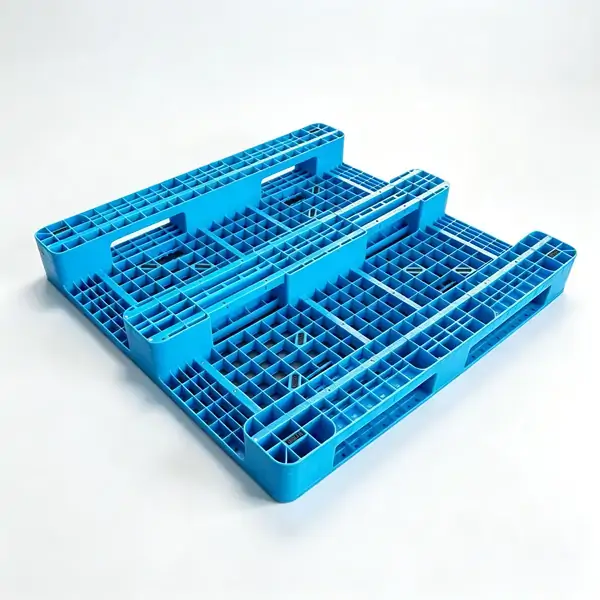
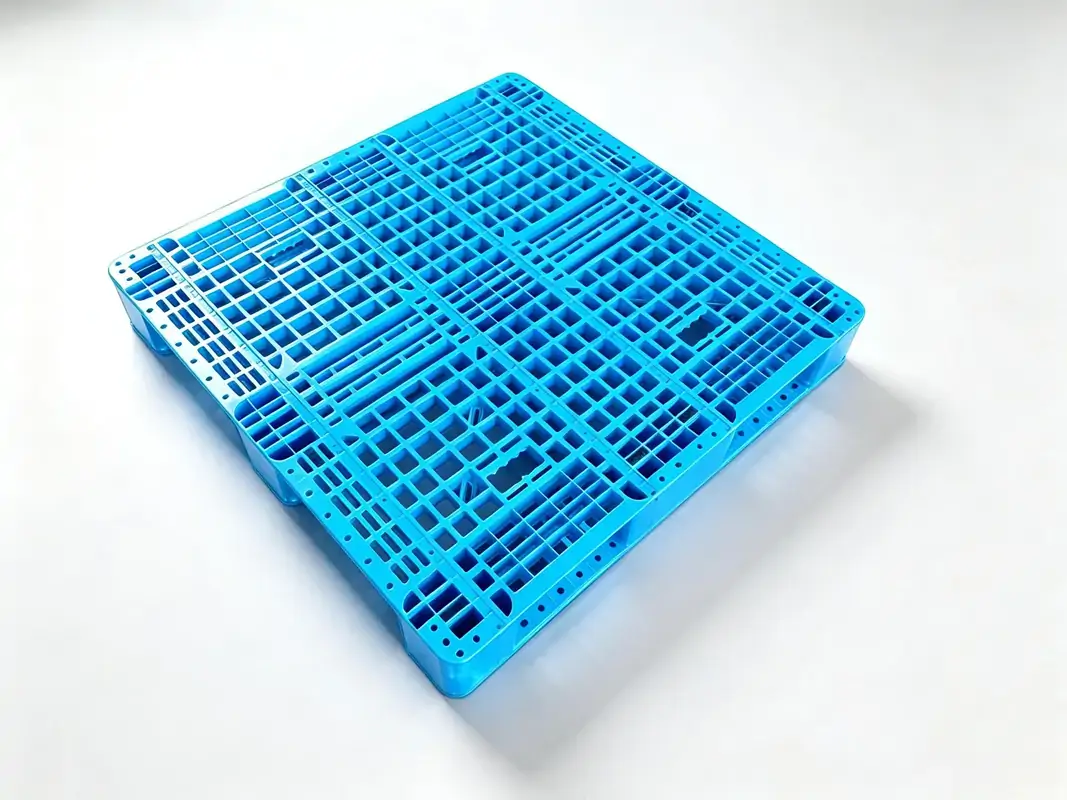
This pallet deserves attention because it addresses three recurring logistics costs: premature replacement, export-treatment requirements and handling disruption.
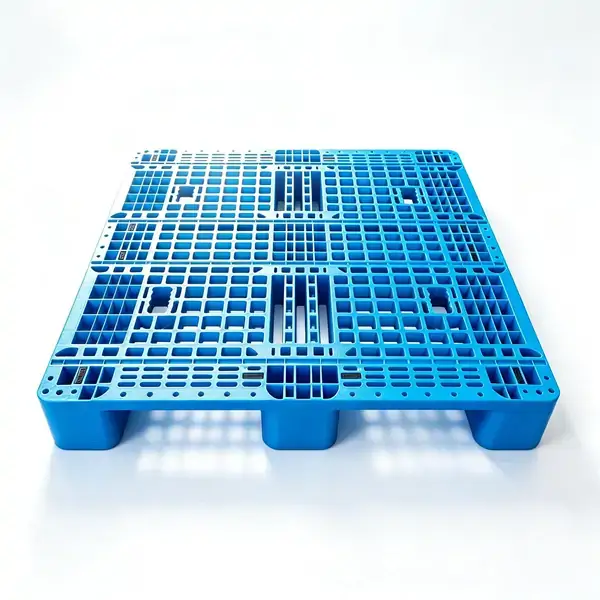
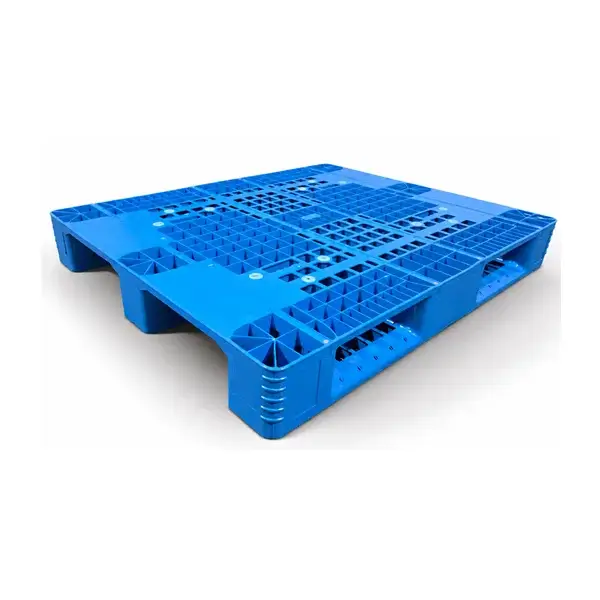
It is a 1100×1100×150mm injection molded plastic pallet with an open grid deck and three continuous bottom runners. I normally recommend this format for repeat warehouse circulation, cold storage, export shipping and projects involving compatible conveyors or AGV systems.
The open deck allows water and cleaning fluid to drain instead of remaining on the loading surface. Its molded grid and reinforcing ribs also reduce unnecessary material in low-stress areas while supporting the required load-bearing structure.
Injection molding gives close control over the pallet's dimensions, grid openings, reinforcing ribs and runner geometry. For procurement teams, that means better batch-to-batch consistency. For warehouse teams, it means fewer dimensional surprises when a fork, conveyor or sensor approaches the pallet.
A nine-leg pallet provides broad four-way access, but its separate feet offer less continuous support underneath. Three runners create defined support paths along the base, which can be useful for racking, chain conveyors and repeated directional handling.
Compared with a full-perimeter or cross-base pallet, the three-runner structure is simpler and can provide easier access from the open sides. Forklift entry may be available from four directions, but hand pallet truck access depends on the load-wheel position, runner openings and entry geometry.
I do not approve equipment compatibility from a product photograph. A bottom-view drawing and the equipment interface dimensions should be checked first.
The open grid deck helps water, condensation and cleaning fluid drain away. It also improves airflow around suitable loads and makes surface contamination easier to see during inspection.
That makes the pallet practical for cold rooms, beverage distribution and washable logistics environments. However, an open deck is not automatically a non-slip deck. Grip depends on the molded surface texture, load packaging and whether anti-slip plugs or strips are fitted.
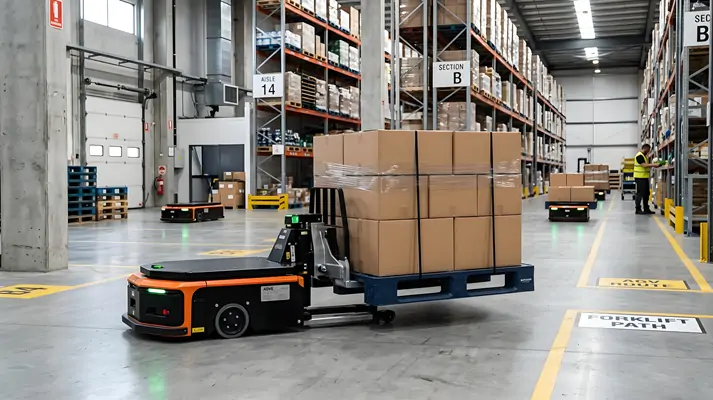
The pallet has an overall height of 150mm, a common profile for warehouse and logistics applications. It may work with standard forklifts, electric pallet trucks and selected automated handling equipment.
The 150mm figure refers to the pallet's total height—not the usable fork-opening height. Fork opening width, clear height, centre spacing and bottom clearance must be confirmed from the technical drawing before equipment approval.
The deck distributes the load into the molded rib structure. The three runners stabilise the base and transfer that load to the floor, rack supports or compatible conveying equipment.
On a roller conveyor, the runner direction and roller pitch must prevent unsupported gaps. On a chain conveyor, the chain centres must align with the runners. "Three runners" is a useful starting point, not a complete conveyor specification.
Injection molding forms the pallet inside a controlled mold cavity. This allows detailed reinforcing ribs, repeatable grid openings and closely controlled fork-entry geometry to be built into the product.
That repeatability matters when pallets are stacked, replaced or introduced into automated handling systems. One pallet fitting the line is not enough; the next production batch needs to fit it as well.
The standard specification uses 100% virgin HDPE with UV stabilisation and low-temperature impact modification. Subject to the approved formulation and actual test documentation, it is designed for cold-storage operation down to approximately -40°C.
Low-temperature suitability does not make a pallet indestructible. Like most plastics, HDPE has reduced impact tolerance as temperature falls. Rated loads, fork alignment and drop-control procedures still apply inside a cold store.
Why avoid recycled resin for this specification? It is not simply a price argument. Recycled resin may vary in contamination level, melt-flow behaviour, shrinkage, colour and low-temperature impact performance. Virgin resin gives us better control over batch consistency when dimensions and automated handling matter.
Quality control starts before molding. Resin batches, drying or conditioning requirements, processing temperatures, injection pressure, cooling cycles and mold maintenance should all be documented. Final inspection should cover unit weight, critical dimensions, flatness, fork openings, runner geometry, appearance and sample load testing.
As non-wood packaging, this pallet is not subject to the treatment and marking rules applied to regulated solid-wood packaging under ISPM 15. It does not require fumigation or heat treatment for that purpose. Any food-contact or market-specific compliance claim must still be supported by the relevant resin declaration and test documents.
| Buyer-Critical Data | Reference Rating | What It Means in Practice |
|---|---|---|
| Dynamic load | Up to 1,500 kg | Reference capacity during forklift movement with an evenly distributed and properly secured load. |
| Static load | Up to 6,000 kg | Reference capacity when the pallet remains stationary on a flat, solid and fully supporting floor. |
| Racking load | Up to 1,000 kg | Applies only to an approved rack arrangement after beam spacing, support direction, temperature and load distribution are verified. |
| Bottom deflection | Confirm against rack test report | Deflection depends on load, temperature, support span, reinforcement and test duration. A universal figure should not be published without test data. |
| Operating temperature | Approx. -40°C to +60°C | Suitable for cold rooms and normal warehouse conditions when the formulation, load and handling method are appropriate. |
These are reference ratings for the standard configuration, not universal guarantees. Final values must match the production model's approved test report.
Dynamic, static and racking loads are not interchangeable. A pallet that supports 6,000kg on a solid floor should never be assumed to carry the same weight between two rack beams. Gravity has no interest in brochure language.
| Comparison Point | Wooden Pallet | Ordinary Plastic Pallet | This Injection Molded 3-Runner Pallet |
|---|---|---|---|
| Initial purchase cost | Low | Medium | Medium |
| Export treatment | May require ISPM 15 treatment | Not required | Not required |
| Dimensional consistency | Can vary with timber and assembly | Depends on mold, design and resin | Controlled through a defined injection mold and process |
| Moisture resistance | Can absorb moisture | Good | Excellent with HDPE construction |
| Splinter and nail risk | High | None | None |
| Cold-storage performance | May absorb moisture, swell or warp | Depends on resin formulation | Modified HDPE designed for use down to approx. -40°C |
| Cleaning and drainage | Difficult to clean consistently | Model-dependent | Open grid deck supports drainage and visual inspection |
| Automation compatibility | Usually limited | Model-dependent | Designed for interface evaluation |
| Three-year ownership cost | Often high in repeat-use systems | Medium | Potentially low in a controlled return loop |
The final row depends on pallet recovery. If the pallet leaves your network and never returns, a lower-cost one-way export pallet may be the correct commercial decision.
If the pallet completes repeated trips, the calculation changes. Replacement frequency, washing time, dimensional consistency, goods damage and line interruptions become more important than the first invoice.
Start with the unit price. Then add expected replacement, repair, cleaning, export treatment, product damage and downtime costs.
Divide that amount by the number of successful trips the pallet is expected to complete. In my experience, cost per completed trip is the useful number. Cost per pallet is only the starting point.
Injection molding is well suited to detailed reinforcing ribs, controlled grid openings and repeatable external dimensions. Blow molding creates a hollow structure that can perform well under impact and in demanding outdoor handling.
Neither process is automatically better in every application. I normally favour injection molding when dimensional consistency, detailed rib design and equipment interfaces are priorities.
Potentially, yes, with a reference racking load of up to 1,000kg for the approved configuration. The actual allowable load depends on beam spacing, runner orientation, load distribution, temperature, reinforcement and permitted deflection.
Send the rack drawing before approving the pallet. Static load data measured on a solid floor cannot be used as a racking-load figure.
It is the pallet's overall height. It is not the clear fork-opening height.
To verify forklift, pallet truck or AGV access, check the fork-opening width and height, runner spacing, load-wheel path and minimum ground clearance shown on the technical drawing.
The modified virgin HDPE formulation is designed for operation down to approximately -40°C, subject to formulation verification and the rated load.
Cold conditions reduce the impact tolerance of most plastics. Fork impacts, uncontrolled drops and concentrated loads must still be avoided.
The open deck is usually not the deciding factor. AGV compatibility depends on fork dimensions, entry direction, runner position, sensor visibility, pallet detection method and bottom clearance.
Send the AGV interface drawing before approval. "It looks compatible" is not a specification I would leave for the night shift.
It may be compatible, but the conveyor layout must be checked. For roller conveyors, confirm roller pitch, roller width, transfer gaps and runner direction.
For chain conveyors, confirm that the chain centres align with the pallet runners. The pallet must remain continuously supported through transfer points.
A forklift may be able to approach from four directions depending on the exact base geometry. A hand pallet truck is more restrictive because its load wheels must pass through or over the bottom structure.
Confirm the pallet truck's fork width, wheel position and required turning clearance before ordering. Do not assume that four-way forklift entry automatically means four-way hand pallet truck entry.
Choose an open deck when drainage, ventilation, reduced material weight and easier visual inspection are priorities. Choose a closed deck when you need spill containment, support for very small packages or a fully covered top surface.
Neither deck is universally better. The load footprint, hygiene procedure and cleaning method should decide.
The grid structure and molded surface texture may improve contact with some cartons or bags, but performance depends on the packaging material and operating conditions.
If the load is slippery, specify anti-slip plugs, strips or another suitable restraint system. Never treat an open grid alone as a load-securing method.
A maintained injection mold provides repeatable geometry, while controlled virgin resin helps reduce shrinkage and colour variation. Process settings must still be monitored because molding temperature, pressure and cooling affect final dimensions.
Minor colour differences can occur between batches, particularly with custom pigments. Approved colour samples and tolerances should be documented before production.
Yes. Options may include custom colour matching, screen printing, hot stamping or molded identification, depending on the required durability and available tooling.
Confirm the artwork, Pantone or RAL reference, marking position and abrasion requirements before production. A warehouse logo that disappears after three wash cycles is decoration, not identification.
It can be manufactured from virgin HDPE suitable for clean logistics applications. However, "food grade" must be supported by the correct resin declaration and market-specific compliance documents for the intended contact conditions.
Colour and appearance do not prove food-contact compliance. Ask for documents, not adjectives.
Request the resin grade, supplier documentation, batch records and relevant material declarations. Unit-weight records and production traceability also help identify unexplained changes between batches.
Smell is not a reliable material test. A strong or burnt odour may justify further investigation, but it cannot replace documentation or laboratory testing.
1. Record the Unit Weight Weigh the approved sample and production pallets using the same calibrated scale. A meaningful reduction in unit weight without an approved design change may indicate less material, a different resin formulation or unstable molding. Weight alone does not prove strength. Use it as a consistency check alongside dimensions and load testing.
2. Inspect Weld Lines, Rib Intersections and Runner Connections Weld lines are normal on complex injection molded parts. They should not show visible cracking, whitening, incomplete filling or weak fusion. Check the runner-to-deck connections, fork-entry corners and major rib intersections first. These are common stress-concentration areas.
3. Check Flatness and Critical Dimensions Place the pallet on a verified flat surface and inspect for rocking or visible distortion. Measure the overall length, width, height, fork openings and runner positions against the approved drawing. For an automated line, use the same tolerances required by the equipment—not a tape measure and a hopeful expression.
4. Test It Under Real Operating Conditions Run a controlled drop test, cold-soak test and repeated fork-entry trial. Then test the pallet with the actual load, rack and handling equipment. A sample should pass the warehouse process, not just look good in the meeting room.
I'm Howard. Before recommending this pallet, I will ask for five things: your load weight, load footprint, rack drawing, handling-equipment dimensions and operating temperature.
Those details determine whether the standard configuration is suitable or whether you need reinforcement, anti-slip components or a different base structure.
Send an inquiry for a quotation, request a sample for testing, ask for the current production lead time or arrange a live video factory inspection. For an AGV, conveyor or racking project, include the equipment interface drawing so compatibility can be checked before production.




 Phone:+8617685506632
 Whatsapp/Zalo:+8617685506632
 Mailbox:howard@ultrapallet.com
 Address:ZHEJIANG, SHANGHAI, CHINA

© 2025 UltraPallet – Factory in China | Privacy (GDPR) | Factory Hotline: +86 17685506632 | sales@ultrapallet.com
Privacy (GDPR) – B2B exemption; data controlled from Qingdao HQ.
🏭 Factory Direct Price | SITEMAP

Fill in below – we'll reply within 2 hours (UTC+8)

Get Your Best Price & Solution Fast

 ×
×

Factory Direct · China
Zalo
💬 Chat on ZaloPhone
📞 +86 176 8550 6632Factory Quote
